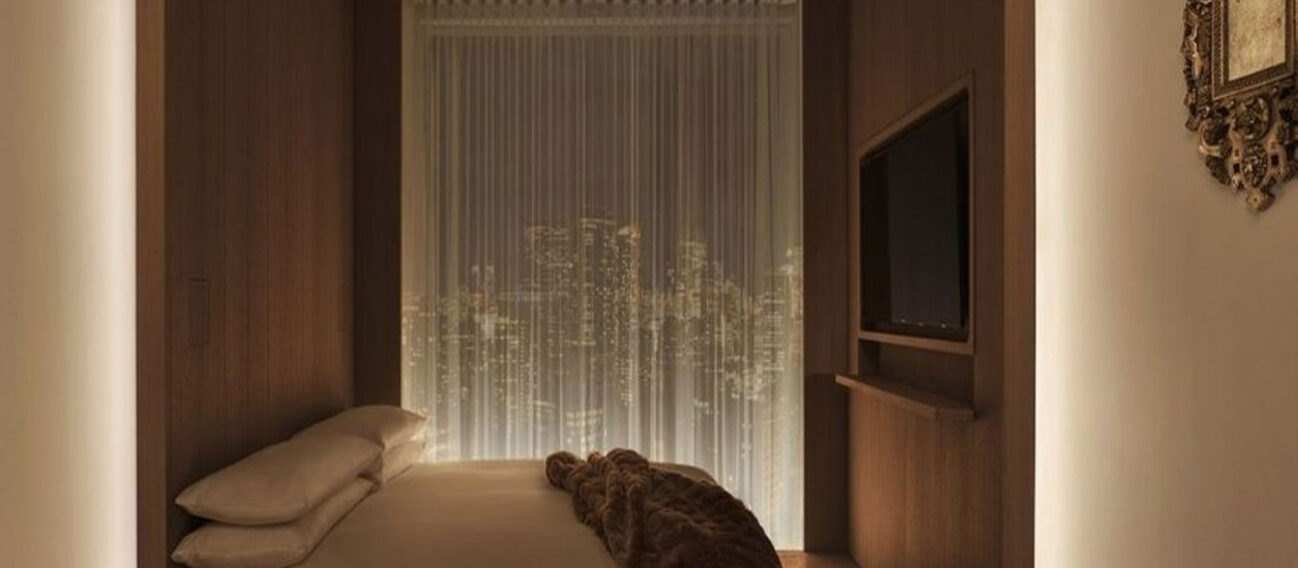
Luxury hotel lighting is not just about illumination; it is about storytelling, atmosphere, and emotional impact. From the moment a guest enters a lobby to the final moments of relaxation in a guest room, lighting plays a defining role in how a space is perceived and remembered. From the glow of a cove-lit ceiling to the precision of millwork-integrated linear lighting, every detail contributes to how a space feels.
Effective hospitality lighting blends aesthetics with function, using layered strategies and precise control to create environments that feel intuitive, comfortable, and elevated. This guide breaks down the core principles and practical strategies that define high-end hotel lighting design.
For designers and specifiers, the challenge lies in balancing aesthetics, flexibility, and performance. This intersection is where architectural lighting systems—particularly those designed for seamless integration—become essential.
Why Architectural Lighting is Critical in Luxury Hospitality Design
Lighting directly influences guest perception, dwell time, and even revenue potential. A well-lit environment enhances architectural features, supports brand identity, and improves comfort.
According to Cvent, cohesive hotel lighting design and the use of natural light can significantly improve guest mood and operational efficiency.
In luxury hospitality environments, lighting must:
- Reinforce brand identity and design intent
- Create a sense of arrival and progression
- Enhance materials like stone, wood, and textiles
- Deliver comfort without glare or harsh contrast
According to the Illuminating Engineering Society, successful hospitality lighting integrates visual comfort, contrast, and adaptability—three pillars that define high-end design.
The Core Principle — Layered Lighting Design
Layering is the foundation of all successful hotel lighting strategies. Rather than relying on a single light source, designers combine multiple layers to create depth, flexibility, and visual interest.
The Four Layers of Light
| Layer Type | Ambient | Task | Accent | Decorative |
|---|---|---|---|---|
| Purpose | Overall illumination | Functional lighting | Visual focus | Aesthetic identity |
| Typical Applications | Cove lighting, downlights, chandeliers | Reading lights, vanity lighting | Artwork, architectural features | Statement fixtures, pendants |
This layered approach is widely recognized as essential in hospitality design, combining ambient, task, and accent lighting to enhance comfort and highlight architecture.
Highlight Architecture and Materials in Hotel Lighting Design
Luxury and high-end hotels are defined by their material palette—layered stone surfaces, rich wood grains, hand-applied finishes, textured wall coverings, metal inlays, and custom millwork details. These materials are often selected not just for durability, but for how they interact with light. When illuminated correctly, they create depth, shadow, and visual richness; when lit poorly, they can appear flat, washed out, or even artificial. These considerations are why lighting design must be coordinated closely with interior finishes from the earliest stages of a project.
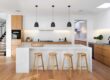
Accent lighting plays a critical role in bringing these materials to life. Techniques such as wall grazing, directional linear lighting, and carefully aimed spot illumination allow light to “skim” across surfaces, revealing subtle variations in texture and craftsmanship. For example, grazing a stone feature wall can highlight its natural irregularities, while soft, indirect linear lighting integrated into millwork can enhance the warmth and grain of wood without creating harsh reflections. In hospitality environments where tactile luxury is part of the brand experience, these nuances matter.
Equally important is controlling beam spread, intensity, and placement. Too much light can flatten a surface, while too little can obscure its detail entirely. High-end lighting solutions—like those from Boca Lighting—allow designers to fine-tune output and distribution so that materials are revealed with precision rather than overwhelmed. The goal is not simply to illuminate a surface, but to sculpt it with light—creating contrast, depth, and a sense of craftsmanship that guests may not consciously notice, but will absolutely feel.
Layering Strategies by Hotel Space
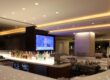
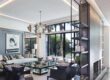
Lobby & Arrival Experience
The lobby sets the tone for the entire property. Here are some best practices:
- Statement decorative fixtures (chandeliers, pendants)
- Warm ambient lighting for welcome
- Accent lighting on art and architectural features
- Lighting to guide circulation paths
A layered approach combining ambient and accent lighting creates both comfort and sophistication in these spaces.
Guest Rooms — Comfort Meets Function
Guest rooms require the most nuanced layering. These are the typical lighting zones in a guest room:
- Entry (orientation)
- Bedside (relaxation + reading)
- Work desk (task lighting)
- Bathroom (functional + flattering light)
Industry guidance emphasizes balancing ambient, task, and accent lighting while allowing guests to control lighting through dimming and personalization. The following are recommended:
- Warm ambient base (50–100 lux)
- Adjustable bedside lighting
- Higher output at vanity (≈300 lux)
Restaurants & Bars — Intimacy and Focus
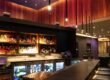
Dining spaces rely heavily on mood. Key techniques for restaurant lighting include:
- Lower ambient light levels
- Focused task lighting on tables
- High contrast for intimacy
- Warm color temperatures
Lighting should draw attention to the dining experience while keeping the surroundings subtly subdued.
Outdoor & Facade Lighting
Exterior lighting extends the luxury experience beyond interiors.
- Wall grazing to highlight textures
- Pathway lighting for safety and wayfinding
- Landscape lighting for ambiance
- Facade lighting for brand presence
Learn more about how outdoor lighting transforms hotels into nighttime landmarks.
Common Mistakes to Avoid in Hospitality Lighting Design
- Over-reliance on overhead lighting (“the big light”)
- Inconsistent color temperatures within a space
- Lack of dimming or control systems
- Ignoring glare and visual comfort
- Poor coordination with interior design elements
Summary — Designing for Experience, Not Just Illumination
Luxury hotel lighting is ultimately about creating memorable experiences. The most successful designs are those that feel effortless to the guest—but are highly intentional behind the scenes.
By combining layered lighting strategies with thoughtful control, material integration, and emotional design, hotels can transform ordinary spaces into immersive environments that elevate both brand and guest satisfaction.
FAQs about layered lighting in hospitality applications
Layered lighting is the combination of ambient, task, accent, and decorative lighting to create a balanced, flexible, and visually dynamic environment that enhances both function and atmosphere.
Lighting shapes guest perception, enhances comfort, highlights architecture, and reinforces brand identity—making it one of the most critical design elements in hospitality.
Most luxury hotels use warm color temperatures (2700K–3000K) to create a welcoming and relaxing environment, while cooler temperatures may be used in task-oriented areas.
A well-designed space typically includes at least three layers—ambient, task, and accent—with decorative lighting added for visual identity and impact.
Lighting controls allow guests and operators to adjust brightness, color, and scenes, enabling spaces to adapt to different moods, times of day, and functional needs.
Luxury lighting is defined by seamless integration, layered illumination, precise control, and the ability to create atmosphere while maintaining visual comfort.
Linear lighting enables continuous, uniform illumination that integrates cleanly into architecture, making it ideal for coves, millwork, and pathways.
Most spaces use warm white light (2700K–3000K), while task areas may use slightly cooler temperatures for clarity.
Concealed lighting works best in coves, behind millwork, under shelving, and within architectural details where the light effect is visible but the fixture is not.