Article Summary
Goodbye to Shadows: Under Cabinet Task Lighting for Kitchen Counters
When remodeling the kitchen next year, pay attention not only to the choice of appliances, flooring, and backsplash, but also to the quality of lighting.
Why Recessed Kitchen Fixtures Are Not Sufficient
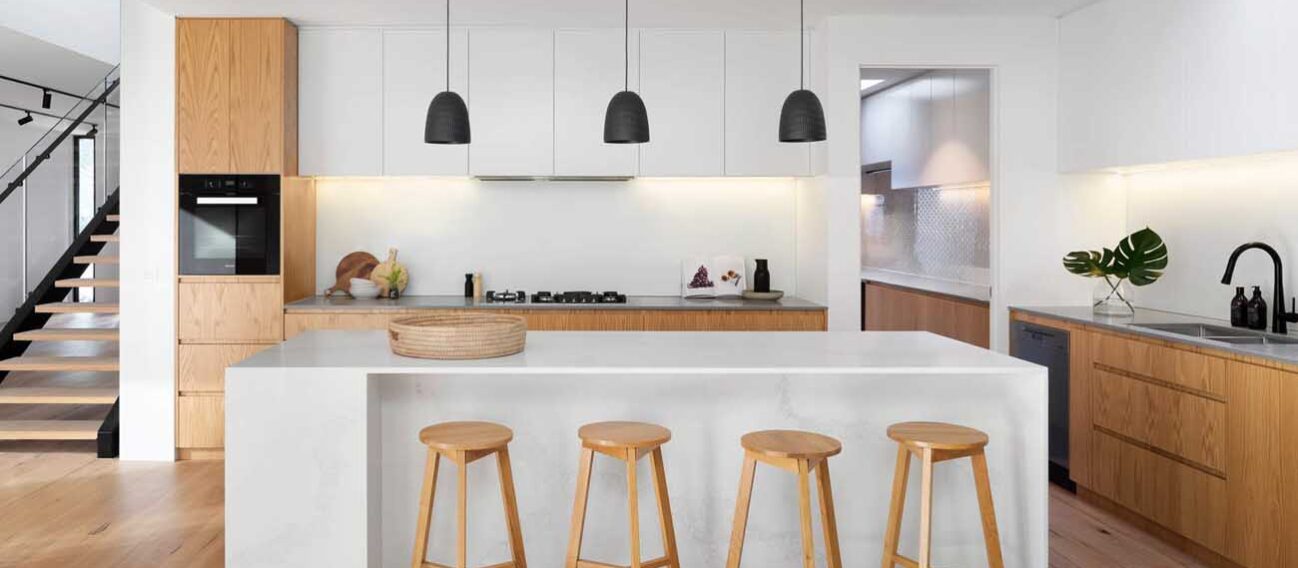
Recessed lights illuminate the room perfectly, but the upper cabinets block light rays that would otherwise reach the surface at an angle before reaching the countertop. The consequence is the appearance of the shadow on the working surface. Under-cabinet fixtures solve this problem by placing the light source directly over the countertop surface and allowing the light to reach it unobstructed.
Comparison of Options of Under-Cabinet Lighting
All lighting varieties differ from one another in terms of performance.
Battery-Powered Puck Lights
These fixtures are initially affordable, but the costs associated with maintenance and battery replacement can be significant. In addition, being single-point sources of light, they create an unpleasant hotspot directly below the device.
LED Strip Reels that Plug into Outlets
It is quite easy to find LED strip reels that plug into outlets online and install them under the cabinets. But such strips consist of dozens of LEDs in series. This means that if one of them stops working, this will be noticeable. Moreover, cheaper models are usually devoid of diffusers, which means that every LED creates a small hot spot rather than creating an even stream of light. The output is also lower than that of specialized fixtures.
Shallow-Profile Linear LED Fixtures
To ensure reliable operation, use shallow-profile linear LED fixtures installed by a professional electrician. Such fixtures have a diffused lens that distributes light evenly along the fixture’s length, creating uniform light without shadows, glare, or reflections on the polished surface. Also, there will be no exposed diodes or fixture outlines reflected on the surface, and you will forget about the cords and batteries once and for all.
Features to Pay Attention to When Choosing Kitchen Under-Cabinet Lighting
Several features distinguish good fixtures from the bad ones.
Color temperature: 2700K-3000K creates a pleasant residential atmosphere; 3500K-4000K provides brighter, more neutral lighting suitable for detailed work in the kitchen. There are also tunable white and dim-to-warm fixtures, which allow switching between the two-color temperatures depending on time and atmosphere.
CRI (Color Rendering Index): Choose 90 or higher so that the food color remains realistic under the light.
Dimming compatibility: Ensure that your current dimmer switch or smart lighting system is compatible with the chosen fixture.
Lumens per foot: This parameter ensures uniform lighting of the entire working surface.
Add Convenience with Dimming and Motion Sensors
When putting your kitchen under-cabinet lighting on a dimmer, you get two functions at once. The light level can be adjusted: increased to facilitate prep work and decreased to create an atmosphere for after-dinner entertaining. Besides, the additional motion sensor function can be convenient: the lights turn on automatically as soon as you enter the room and go off when the room is empty, saving energy.
Role of Under-Cabinet Lighting in Full Kitchen Lighting
There are three types of lighting in a good kitchen: ambient (lights in the ceiling that illuminate the whole room), task (lighting that illuminates the countertop, prep area, etc.), and accent (highlighting specific elements of the interior). Task lighting is what most kitchens lack, but it makes the biggest impact.
FAQ
What is kitchen task lighting?
Task lighting is lighting located directly above a work surface to eliminate shadows and improve visibility during food preparation and other kitchen activities.
Where should I install under-cabinet lighting in my kitchen?
Light fixtures should be installed along the bottom edge of upper cabinets to direct light onto the countertop.
What color temperature suits kitchen task lighting?
The majority of kitchens look best with 2700K-3000K, creating a warm atmosphere, or 3500K-4000K, creating a bright, neutral atmosphere for preparing food. You can also use tunable white fixtures to choose the desired color temperature.
Are LED strip lights or linear fixtures better for under-cabinet lighting?
Linear LED fixtures are usually superior to LED strips because they use a diffuser lens and don’t have individual diode failures or visible hotspots, as in LED strip reels.
Should under-cabinet lighting be dimmable?
Yes, dimming fixtures are the best option because you can increase the light level for food preparation and reduce it to create an atmosphere and save energy.
Do under-cabinet lights need to be hardwired?
Hardwired fixtures deliver the most reliable and aesthetic solution: there are no cords and batteries to worry about and no failures. However, you can still choose plug-in or battery-powered devices.
Suggested Contextual Links
Under-cabinet application page: https://boca.lighting/applications/under-cabinet-lighting/