Article Summary
- Accent lighting is focused light at least three times brighter than the ambient light in the space, which draws the viewer's attention to the artwork.
- LED fixtures are a good choice for museums since they have high CRI, adjustable color temperature, dimming capabilities, and low UV emission.
- Wall washing, wall grazing, and adjustable spotlighting all have unique purposes.
- A good lighting design considers visibility, conservation restrictions, and the story that the curator is trying to tell.
Accent Lighting for Art Museums and Galleries: The Role of LED Fixtures
Museums and art galleries are home to some of the most unusual and beautiful pieces in the world. Art galleries can be a source of inspiration and an escape on a bad day. Depending on the curatorial story the curator wishes to tell and the lighting in the space, a gallery can provide visitors with a unique experience.
This article will explain the principles of accent lighting in galleries and museums, appropriate LED fixtures, and the right balance between visibility and preservation.
What Is Accent Lighting in an Art Gallery?
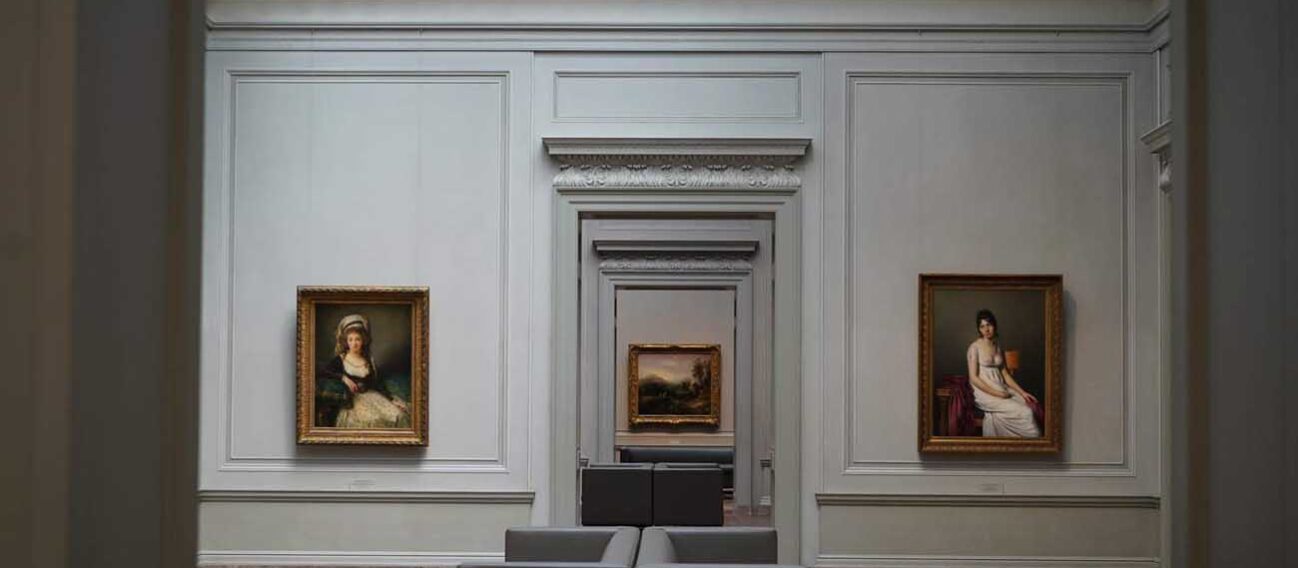
Accent lighting is also known as highlight lighting. It is a lighting technique that uses focused light to draw attention to a specific area or piece. An object that gets accent lighting in a gallery could be a painting, sculpture, photograph, display case, or architectural element. Accent lighting is always at least three times brighter than the space’s ambient lighting and is used to emphasize certain details and textures and draw the viewer’s attention.
Ambient lighting includes natural daylight and sets the space’s overall lighting level, while accent lighting adds layers to it.
Why LED Lighting Is the Preferred Choice for Museums and Galleries
Thanks to their energy efficiency and the various advantages LED lighting fixtures offer, they have become the new standard for illuminating artworks.
High CRI for Accurate Color Representation
The Color Rendering Index (CRI) measures a light source’s ability to render the true colors of the objects it illuminates. For artwork, it is recommended to have a CRI of 90 or higher to accurately represent the colors of paints and materials used by the artist. Many lighting designers also consider TM-30 metrics, which provide detailed information about color rendering.
Tunable Color Temperature and Dimming Capabilities
Various artworks require different types of lighting. Warm light at roughly 2700K – 3000K is more appropriate for gold leaf, wood, and traditional oil paintings, while neutral lighting at 3500K – 4000K is more suitable for contemporary art or photographs. LED fixtures capable of adjusting color temperature and brightness can create a different atmosphere for the gallery depending on the exhibition.
Long Operating Time and Low Maintenance
High-quality LED fixtures have a lifetime rating of 50,000 hours or more. A longer lifetime means fewer lamp replacements, fewer disturbances for exhibition visitors, and lower risk when handling valuable artworks.
Protection of the Artworks from Light Damage
Light exposure is cumulative and irreversible; therefore, there are recommendations to limit the illuminance of various artworks. LEDs emit little ultraviolet and infrared light in their beam, resulting in lower radiant heat on artworks compared to traditional halogen lamps. According to many conservation guidelines, highly light-sensitive items such as textiles, watercolors, and works on paper must be lit to a maximum illuminance of 50 lux. Oil and tempera paintings are more light-resistant and can withstand illuminances of about 200 lux. Dimming controls help to achieve the required illuminance.
Wall Washing, Wall Grazing, and Spotlighting: Finding the Most Appropriate Lighting Technique
The function and aesthetics of a given space determine the most appropriate lighting fixture.
Wall Washing for Smooth Lighting
Wall washing creates an even, smooth illumination of a vertical surface; it has very few shadows and hot spots; therefore, it is perfect for large paintings, rows of framed pieces, or exhibition walls. More information on wall washing can be found in our article, “Wall Washing vs. Wall Grazing: What’s the Difference?”
Wall Grazing for Creating a Dynamic Look
Wall grazing involves placing lighting fixtures close to a surface and lighting it at a steep angle. This technique highlights the texture of the surface. Since it accentuates surface imperfections, it is more suitable for intentionally textured finished surfaces, such as artwork with heavy impasto.
Adjustable Accent Lighting and Spotlights
Adjustable fixtures that can be mounted in a recess, on the surface, or on track lighting can be used to direct a beam of light at a specific piece. They are perfect for sculptures and artifacts, or for highlighting separate artworks.
Linear Accent Lighting
Linear LED fixtures can be installed in millwork, display cases, and other architectural elements to create a line of light that serves as a guide. When used together with cove lighting, they set the atmosphere of the entire gallery, while individual artworks are highlighted with focused lighting.
Lighting Controls: Making the Lighting Flexible
Every exhibition is different, and the lighting must adapt to it. With the help of dimming and control systems, the curators can adjust each lighting setup without replacing anything, and smart dimming components enable time-of-day or event-based scene changes.
With lighting controls, it is possible to preset scenes for various exhibitions, events, or times of day. It is also possible to set limits on light exposure for artworks and ensure they are not exceeded. Lowering the light level during off-hours or cleaning and raising it during tours and openings are easy ways to reduce light exposure.
Design Tips for Gallery and Museum Lighting
- First, think of the curatorial story. What should visitors see first, second, and third?
- Layers of light. You should use ambient, accent, and architectural lighting in combination rather than relying on a single source.
- Prevent glare. Proper shielding, proper aiming angles, and fixture placement can help with it.
- Conserve contrast ratio. Use a contrast ratio of at least 3:1 between accent and ambient lighting; increase it for more drama.
- Make it flexible. Select fixtures and controls that can adapt to new exhibitions.
- Test with real artwork. Aiming sessions will help you find problems that mock-ups and drawings don’t show.
Frequently Asked Questions About Accent Lighting in Galleries
What is the best lighting for an art gallery?
LED lighting with high CRI, tunable color temperature, and dimming controls is considered the best option. It allows for rendering of the object’s true colors and adjustment of the light between exhibitions, and emits little to no UV in the beam.
How bright should museum lighting be?
Common recommendations include illuminances of about 50 lux for highly light-sensitive objects such as textiles and works on paper, and about 200 lux for moderately light-sensitive objects like oil paintings. Always check the recommended targets with the collection’s conservator.
What is the difference between accent lighting and ambient lighting?
Ambient lighting provides general illumination for the room. Accent lighting is focused lighting that is at least three times brighter than ambient lighting and is used to highlight a specific object or architectural element.
Is LED lighting safe for artwork?
It is safe when specified properly. LED fixtures emit relatively little UV and infrared in their beams; therefore, they reduce the risk of damage and heat exposure compared to older lighting types. Light exposure should still be controlled using dimming and an appropriate illuminance level.
What is the difference between wall washing and wall grazing?
Wall washing creates even lighting on a surface; wall grazing skims the surface to emphasize its texture.
Bring Clarity and Mood to Your Gallery with Boca Lighting and Controls
The next time you visit a gallery, take a moment to notice the overall lighting. There is a chance that accent lighting is doing most of the work, guiding your eye, creating mood, and revealing details that would otherwise be hidden. Boca Lighting and Controls provides American-made LED fixtures and controls for wall washing, wall grazing, cove, and accent lighting. Find out more about our lighting collection, view our recent projects, or contact your local agent about your project.